Elon Musk and the GLP-1 Revolution: The Strange New Science of Shrinking Appetite
Elon Musk turned a quiet gut hormone into a cultural phenomenon when he credited GLP-1 drugs for his transformation. But the real story, from lizard venom to brain chemistry, is stranger and more human than any celebrity endorsement.
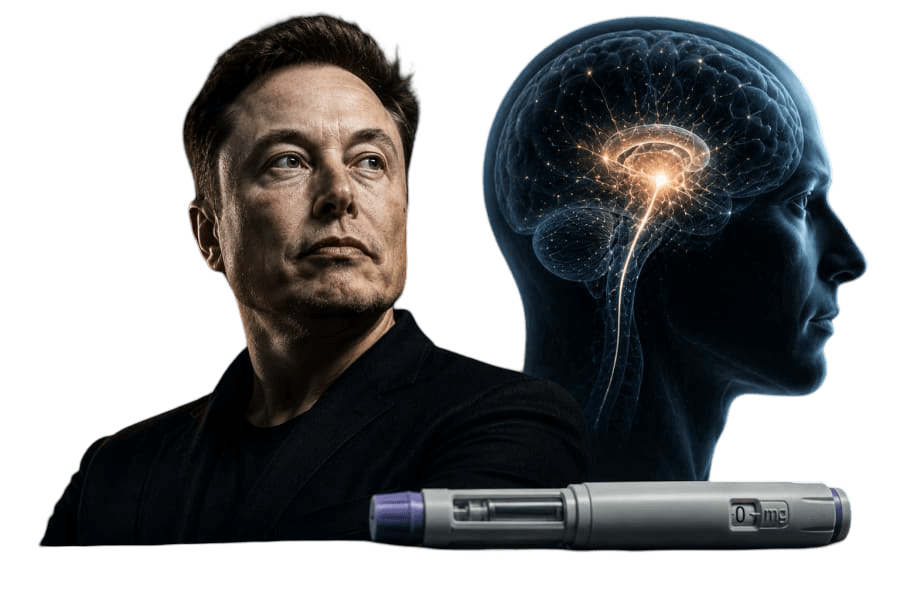
The richest man on Earth once looked into a camera and casually credited a molecule for reshaping his body. Elon Musk, a person who launches rockets and buys entire social networks on a whim, pointed not to a personal trainer or a monk-like discipline, but to a drug. Ozempic. Wegovy. The GLP-1 family. And with that offhand confession, he shoved a quiet biochemical marvel into the blinding glare of celebrity culture.
Here is the part nobody prepared us for: the science underneath his tweet is far weirder, far more beautiful, and far more unsettling than any billionaire endorsement could capture.
A Hormone Born in the Gut 🧬
Start where the story actually begins, which is not in a pharmacy but in your intestines. When you eat, your gut releases a hormone called glucagon-like peptide-1. It is a tiny messenger, a molecular whisper, and it does something almost tender. It tells your pancreas to release insulin. It tells your stomach to slow down. And it travels up to your brain and murmurs a single, powerful word.
Enough.
That is the ancient magic of GLP-1. It is the body's own signal that the meal is over, the hunger is answered, the search can stop. For millions of years this whisper kept our ancestors alive without ever needing a prescription.
The drugs Musk mentioned are essentially a louder, longer version of that whisper. Scientists took the natural hormone and rebuilt it so your body cannot break it down as quickly. Instead of vanishing in minutes, the synthetic version lingers for days. The whisper becomes a steady hum. And suddenly the brain that once screamed for a second helping goes quiet.
The Gila Monster Twist 🦎
Now for a detail so strange it feels invented. One of the breakthroughs that made these drugs possible came from studying the venom of the Gila monster, a chunky desert lizard that eats only a few times a year.
Researchers discovered a compound in its saliva that mimicked GLP-1 but stuck around far longer in the body. A reptile that can survive months between meals ended up teaching pharmaceutical chemists how to build a drug now used by people who cannot resist a midnight snack.
Read that again. The appetite of a lizard living under a rock in Arizona helped shape a medicine now discussed on billionaire podcasts. Nature is not just stranger than we imagine. It is stranger than we are allowed to imagine.
When Musk Speaks, the Culture Listens 📢
This is where the tone shifts, because celebrity endorsement is a chaotic, funny, and slightly terrifying thing.
When Elon Musk casually names a drug, he is not writing a prescription. He is firing a cultural cannon. Pharmacies empty. Search engines melt. And somewhere, a diabetic patient who genuinely needs the medication to manage their blood sugar finds the shelves bare because the internet decided thinness was the new status symbol.
There is a dark comedy here that is hard to ignore.
A drug engineered to treat a serious metabolic disease became a red-carpet accessory, all because famous people started looking suspiciously sculpted around the same time.
The whisper of a gut hormone got hijacked by the loudest megaphone in modern life: fame.
What the Drug Actually Does 🔬
Strip away the hype and the biology remains genuinely astonishing. These medications do more than shrink appetite. Studies have shown they can improve heart health, reduce the risk of certain cardiovascular events, and help stabilize blood sugar in people with type 2 diabetes.
Some researchers are now exploring whether the same molecule that calms hunger might also calm other cravings entirely. Early signals suggest it could influence the brain's reward system in ways that touch alcohol use and addictive behavior. The hormone that says enough at the dinner table may also whisper enough to the parts of us that chase other compulsions.
That possibility is thrilling. It is also a reason to slow down and stay skeptical, because a molecule that touches so many systems can also surprise us in ways we do not yet understand.
The Body Fights Back 😬
No miracle arrives without a bill.
People taking these drugs often report nausea. Their stomachs empty so slowly that food sits heavy and unwelcome. Some feel exhausted. Some lose muscle along with fat, a quiet cost hidden inside the celebrated shrinking.
And then there is the twist that rarely makes the glamorous headlines.
When people stop taking the drug, the whisper fades. The natural hunger signals come roaring back. The weight often returns. This is not a one-time fix but an ongoing negotiation with your own biology, potentially for life.
The body does not surrender its ancient survival instincts easily. It simply waits for the drug to leave.
The Uncomfortable Question of Who Gets It 💰
Here is where the story turns from scientific wonder to human inequality.
These medications are expensive. Access depends heavily on insurance, income, and geography. So the very drug that fascinates the world's wealthiest people remains out of reach for many of the patients whose diseases it was designed to treat.
A billionaire can mention it in passing. A working parent with diabetes may spend months fighting insurance denials to get the same molecule that a celebrity uses to fit into a suit.
The gut hormone does not care about your bank account. The healthcare system, unfortunately, cares enormously.
Awe and Caution in the Same Breath ⚖️
What makes this moment remarkable is the collision of two truths that refuse to cancel each other out.
The first truth is genuine awe. Humanity took a signal buried in our own digestive tract, borrowed inspiration from a desert lizard, and engineered a medicine that quiets a hunger that has tormented people for lifetimes. For someone battling obesity linked to real health dangers, this is not vanity. It is relief. It is a body finally cooperating.
The second truth is genuine caution. A drug this powerful, this celebrated, and this expensive invites hype that outruns evidence. It invites shortages. It invites a culture that treats a medical tool as a shortcut to an impossible ideal.
Both truths are real. Both deserve our attention.
The Whisper and the Roar
Elon Musk did not invent GLP-1. He did not discover the hormone, tame the lizard venom, or design the molecule. He simply spoke, and the world leaned in.
But the true main character of this story was never the billionaire. It is the quiet chemistry inside every human body, the messenger that has been telling us enough since long before pharmacies or celebrities existed.
We have now learned to amplify that whisper into a roar. The question that lingers, heavy and unresolved, is whether we can be wise enough to listen to the whisper of caution just as closely as we listen to the roar of a famous man online. The molecule is patient. It will keep doing exactly what it was built to do. The harder test belongs entirely to us.